News
Recent News
Papers, protocols, positions and talks, newest first. Open an item for the details.


Joined COST Action EndLess on endocrine disruptors
Denis Zosen was accepted as a member of three Working Groups (WG1, WG2 and WG4) of COST Action CA25174, Reducing Endocrine Disruptor Exposure for a Healthy Start for Future Generations (EndLess).
EndLess is a European network on exposure to endocrine-disrupting chemicals during pregnancy and early childhood. It brings together environmental health, toxicology, epidemiology, public health and the social sciences to map exposure sources, harmonise how exposure is measured, link epidemiological and toxicological evidence, and turn the result into prevention tools and guidelines. It is a networking Action, with no research funding of its own, and it supports training schools, short-term scientific missions and workshops, with a focus on young researchers.
The three groups are: WG1, Early-Life EDC Exposure Mapping and Evidence Base; WG2, Harmonised Exposure Assessment and Data Integration; and WG4, Knowledge Translation, Training and Science Communication. They match the lab's central question, when in development a cell becomes sensitive to a pollutant or a drug, and the lab's interest in human organoid models as a way to test it.
The aim is to bring organoid and cell-state data into the exposure-assessment discussion, learn from the epidemiology and toxicology groups, and share methods and outputs openly. COST Action CA25174 · Collaborate
Joined the Human Cell Atlas consortium
Denis Zosen joined the Human Cell Atlas (HCA) as a member. The HCA is a global consortium that builds open reference maps of the cells in the healthy human body. He takes part in three of its Biological Networks: Organoid, Development and Nervous System.
The lab asks when in development a cell becomes sensitive to a drug or a pollutant. Answering that needs reference maps of normal cell states over time, and a way to check which of those states a human organoid reproduces and which it misses. The three networks work on exactly those pieces: developing tissue, the nervous system, and organoid models mapped onto primary tissue.
The expectation is to learn from groups that already map these states, use the shared references to benchmark the lab's organoid models, share methods and data back openly, and meet collaborators.
Preprint: DNA recorders carry a built-in early bias
A new preprint is open on Zenodo: The writable window: division-coupled DNA recorders carry a built-in early bias in human cortical organoids.
DNA recorders write a cell's history into its genome, and groups are starting to plan months-long runs in human brain organoids to ask when a drug or a pesticide harms the developing cortex. Those recorders write when a cell divides, and neural progenitors eventually stop dividing for good. Nobody had computed what that does to a comparison of exposures at different times.
In a model of a 150-day organoid, half of all symbols are written before day 27, and a cell is 5.3 times more likely to record a one-day exposure on day 15 than on day 75, a ratio that runs from 1.5 to 6.6 across parameterisations of the tissue and sits at 2.4 under the spread that matches measured clonal structure. A true three-fold late window then reads as a 1.7-fold early one, and a genuine five-fold late window comes back flat. Seven mechanisms tested to remove the effect did not remove it. The paper gives design rules for recorders and organoid experiments, and a correction that needs only a proliferation stain and the clock-symbol distribution. The recording model reproduces the array occupancy of a published mouse embryo, which tests the writing chemistry but not the window itself.
Read the preprint (CC BY 4.0) · Simulator, analysis code and results · GitHub · Publications
Guest Researcher at NCMBM
Denis Zosen joined the Norwegian Centre for Molecular Biosciences and Medicine, the Norwegian node of the Nordic EMBL Partnership, as Guest Researcher. More on the people page.
Spinal cord organoid paper published
Spinal cord organoids are small clumps of human nerve tissue grown from stem cells. Researchers use them to study how the spinal cord develops and to prepare cell therapies, but nobody had shown whether their neurons behave like real ones.
Recording from single neurons between days 15 and 32 of growth, the team saw them mature step by step. Resting voltage settled, electrical currents grew stronger, and some neurons already fired in the pattern typical of motor neurons, the cells that drive muscles. The organoids are a credible model of human spinal cord development.
Published in ACS Chemical Neuroscience and open access. Read the paper · Publications
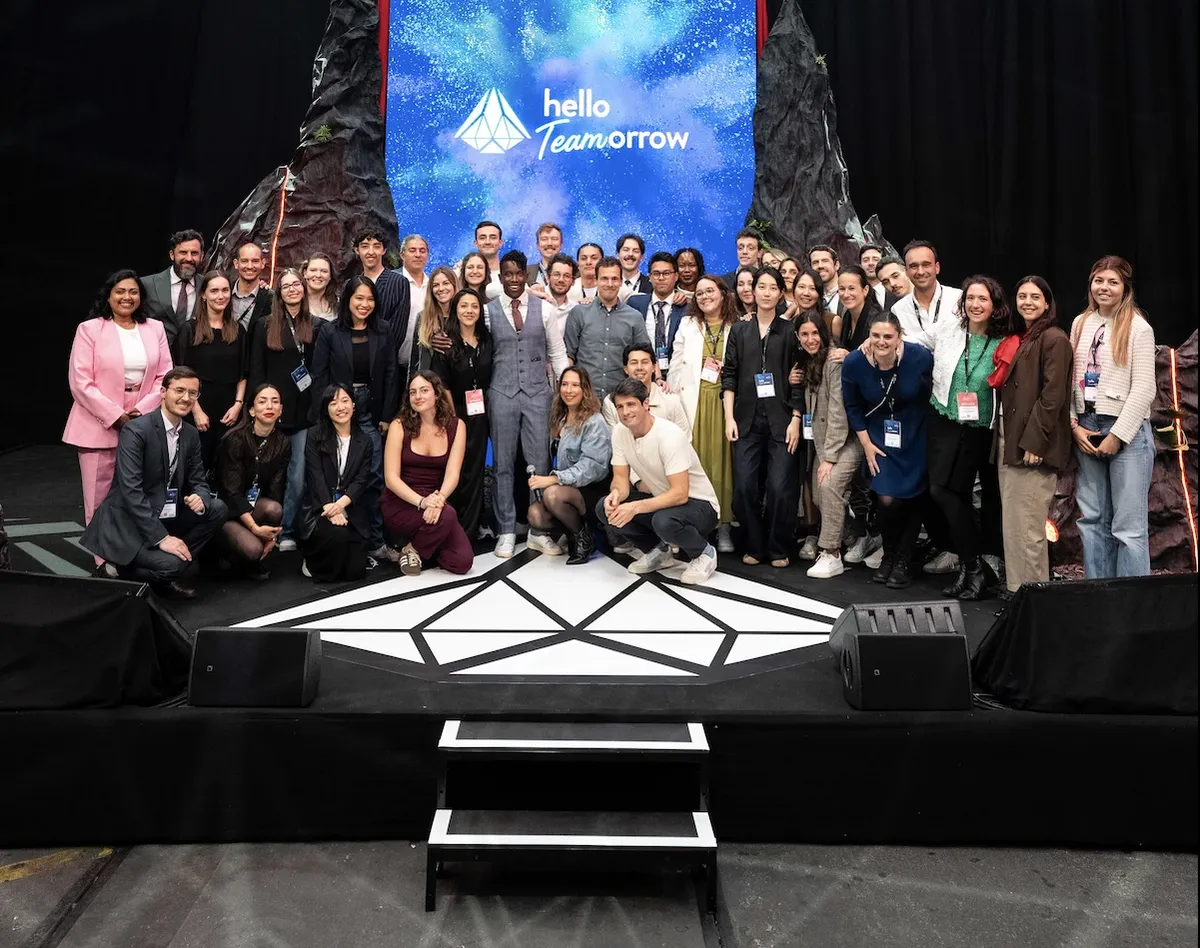
Hello Tomorrow Global Summit, Amsterdam
Hello Tomorrow is a deep-tech community that connects early-stage deep-tech startups with researchers, investors and industry. Its Global Summit took place on 11 and 12 June 2026 at NDSM in Amsterdam.
Denis Zosen joined the summit and moderated the Deep Tech Pioneers Exhibition area, where selected early-stage startups show live demos. Deep tech sits close to the lab's own question: how to turn what we learn in human cells into tools and evidence that people can use.
Venlafaxine and miR-92 paper published
Antidepressants are widely used in pregnancy, but little is known about what they do to the developing brain. In chicken embryos, both escitalopram and venlafaxine reached clinical concentrations in the brain.
Only venlafaxine raised 13 microRNAs in the cerebellum and cut neurite outgrowth. One of them, miR-92, has a human counterpart, miR-363, that also rose in human neurons. The two drugs do not act alike, and the microRNA is a lead worth following.
Published in Neurochemistry International and open access. Read the paper
Career panel at the DLN Research School Conference, Stavanger
Denis Zosen was invited to join the panel discussion Navigating Your Career: Insights & Roadmaps at the Digital Life Norway (DLN) Research School Conference in Stavanger. The panel shared practical advice with early-career researchers on building a path in and beyond academia. A short clip, with captions in the video:
Global Biotech Revolution GapSummit, Cambridge
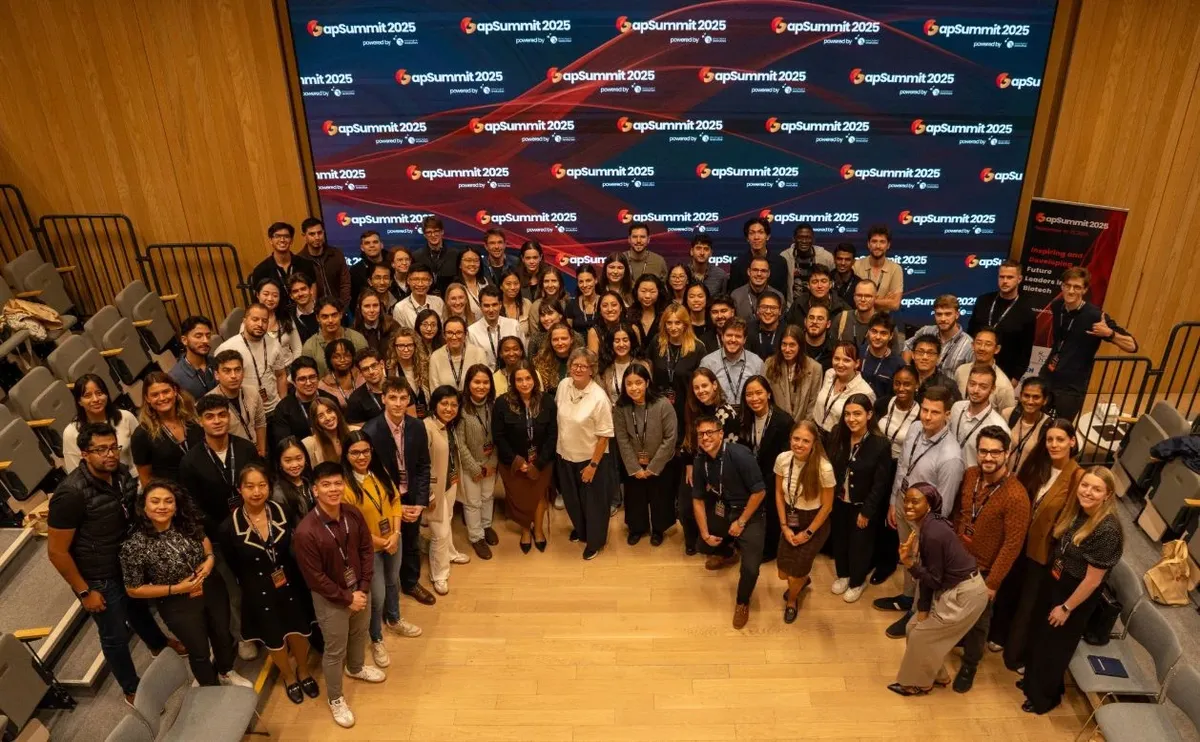
Global Biotech Revolution is an international non-profit that builds a global network of future leaders in biotechnology and healthcare. Its flagship GapSummit, held at the University of Cambridge, brings together 100 young leaders chosen in a competitive selection from around the world, with more than 60 industry leaders.
Denis Zosen was selected as one of the 100 global leaders for the GapSummit in 2025, and earlier for the Excellerator in 2023, both on site at the University of Cambridge, United Kingdom.
O'Reilly diversity, equity and inclusion scholarship
Awarded a 2025 O'Reilly diversity, equity and inclusion scholarship, which gave a full year of unlimited access to the O'Reilly learning platform, from June 2025 to June 2026. Denis used it to expand his IT and digital communication skills.
Expert Reviewer for BioExpert Network and Capital Cell
Denis Zosen joined BioExpert Network and Capital Cell as an Expert Reviewer for biotech and healthcare ventures. He evaluates early-stage biotech and healthcare startups for scientific viability, innovation, risk and market potential, as part of the scientific due diligence.
Openings are announced here and on the Join us page.